Xwejni Bay · Gozo
Washing Machine
A small U-shaped notch in the salt pan shelf west of Xwejni that gives straight onto a rocky plateau at 8 metres. The name is a warning as much as a joke: in winter the sea churns in the notch exactly like a drum on spin cycle.
Sea conditions
Excellent right now
Flat, sheltered and calm
Forecast for the site, updated 01:33 AM
- Waves
- 0.4 m
- from ESE
- Wind
- 7 km/h
- SSW, gusts 14
- Swell
- 0.3 m
- 5 s period
- Sea temp
- 28 °C
- air 27 °C
Next 7 days
Sunrise 06:47, sunset 19:06
Exposed to wind and swell from: NW (315°), N (0°), NE (45°). Only worth it on a properly flat day. The site is named for how it behaves when it is not. Southerly winds flatten it completely; anything northerly closes it well before Xwejni Bay itself becomes unusable. Best season: May to October, or any settled southerly day in winter..
The dive
Walk left past the salt pans from the Xwejni parking and you come to a neat little inlet cut into the rock, barely wider than a couple of divers. On a calm day it is a beautiful entry, sheltered and shallow, and you are on the plateau within seconds of putting your face in.
Below, the ground is a patchwork of low rock and Posidonia sitting around 8 metres, with reef walls running away in both directions and dropping towards 15 metres and beyond. It rewards the sort of diver who stops and looks: the wall crevices are packed with small life, and there is more here than the first glance suggests.
As a standalone dive it is modest, and plenty of divers say so. Its real value is as an alternative entry when the main slipway is busy, as a shallow second dive, and as a short hop onto the same reef system that leads out towards Double Arch.
Just respect the name. When there is any north in the sea the notch becomes a surge trap, and getting out of a narrow rock slot with a swell running is not a game worth playing.
- Quirky U-shaped rock entry carved into the salt pans
- Plateau at 8 metres reached within a minute of entry
- Reef walls in both directions worth a close inspection
- Handy alternative when the Xwejni slipway is crowded
- Great macro and easy long bottom times
Typical plan
Stride into the notch, drop onto the 8 metre plateau and pick a direction along the reef wall. Work slowly with a torch into the crevices, turn at a third of your gas and return along the same wall a little shallower. Finish on the plateau for a long safety stop. A single cylinder of air gives 55 to 70 minutes at a maximum of around 12 to 15 metres. Time the exit with the swell and hand kit up if anyone is on the rock.
What the bottom looks like
- 1U-shaped rock inlet entry2 m deep · 5 m out
- 2Plateau of patchy rock at 8 metres8 m deep · 40 m out
- 3Posidonia patches across the plateau8 m deep · 70 m out
- 4Reef walls running away in both directions11 m deep · 150 m out
- 5Outer edge dropping deeper15 m deep · 220 m out
Patchy low rock and rubble with Posidonia between, on a shallow plateau around 8 metres.
Who you might meet

Mediterranean damselfish
Almost always · Ċawl
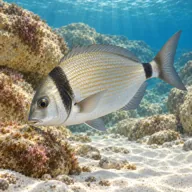
Two-banded bream
Almost always · Sargu
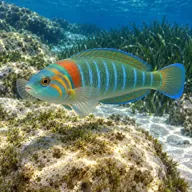
Ornate and rainbow wrasse
Almost always · Tirda tal-passa
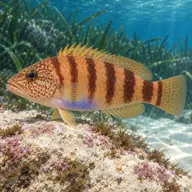
Painted comber
Almost always · Serran
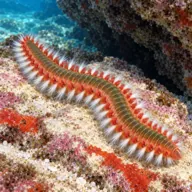
Bearded fireworm
Almost always · Busuf
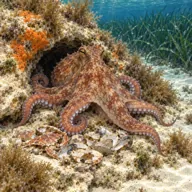
Common octopus
Often · Qarnita
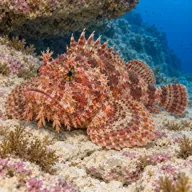
Scorpionfish
Often · Skorfna
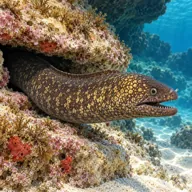
Mediterranean moray
Sometimes · Morina
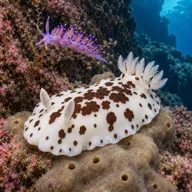
Nudibranchs on the wall
Sometimes · Spring
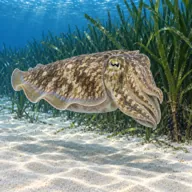
Cuttlefish
Lucky day · Siċċa · Spring
Getting in and staying safe
Park off the Xwejni coast road and walk left along the shelf past the salt pans, carrying kit carefully across the rock. The pans are working heritage, so avoid standing tanks on the pan floors and mind the brittle edges. Entry and exit are a giant stride or seated slide into the U-shaped notch and a scramble back out, easiest on a flat sea. No ladder. Kiosk near Xwejni Bay in season; toilets and cafes in Marsalforn.
- Surge and washing-machine turbulence in the narrow inlet when there is any swell
- Awkward exit onto rock with no ladder
- Slippery, sharp limestone and salt pan edges on the walk in
- Sea urchins on the entry rock
- Shallow depth means you feel every bit of sea state
- Jellyfish in late summer
A bit of history
The inlet is a cut in the Globigerina limestone shelf that carries the Xwejni salt pans, terraces still worked by local families for sea salt each summer. The nickname comes straight from divers watching the water spin and foam in the notch during winter storms.
Divers say
Sign in to rate this site and leave a note for the next diver.
- No reviews yet. First one gets bragging rights.
Further reading: Malta Dives, Washing Machine · Ritual Dive, Washing Machine · Sidemount Society, Anchor Reef to Xwejni Bay