Gozo
Ta' Camma Caves
A run of five caves set into a sharp cliff wall on Gozo's north western shoulder, with a boulder-strewn base, resident groupers, and one chamber where you can surface inside the rock from eighteen metres.
Sea conditions
Excellent right now
Flat, sheltered and calm
Forecast for the site, updated 01:47 AM
- Waves
- 0.4 m
- from ESE
- Wind
- n/a
- Swell
- 0.3 m
- 5 s period
- Sea temp
- 28 °C
Next 7 days
Exposed to wind and swell from: SW (225°), W (270°), NW (315°), N (0°). Open to the whole western and northern quarter, so it needs a calm day with an easterly or nothing at all. Surge is the thing to watch rather than current: even a modest leftover swell will push you around inside the cave entrances. Visibility outside the caves is typically twenty five to thirty five metres and the wall lights up beautifully in the afternoon. Best season: May to October, with the calmest and clearest conditions usually falling in June and again in late September..
The dive
Ta' Camma sits on the stretch of coast between San Dimitri Point and Wied il-Mielah, which is about as remote as Gozo diving gets. The cliffs here are knife edged above the waterline and they keep that character underwater, dropping in steps and slabs to a rocky seabed strewn with boulders of every size.
Five caves are cut into the wall and none of them is a technical proposition on its own. They are wide, mostly well lit near the entrances, and easy to move through if you keep your fins up. That last part matters, because the floors hold fine silt that will erase the visibility behind you in about four kicks. One of the caves runs back far enough to let you surface in a second chamber reached from around eighteen metres, which is the sort of thing that either delights you or makes you want to leave immediately.
Away from the caves the wall is honeycombed with fissures and small holes, and that is where the life is: grouper under the bigger boulders, moray heads in the cracks, octopus rearranging pebbles across their doorsteps. The dive rewards a slow pace and a good torch far more than it rewards depth.
Remote, quiet, and rarely crowded, which is a large part of the appeal.
- Five caves in one dive, none of them requiring a technical ticket
- Surfacing inside the rock in a chamber reached from eighteen metres
- Grouper tucked under boulders at the base of the wall
- A fissured wall that repays a torch and a slow pace
- Almost never busy
Typical plan
In off the boat at the wall, drop to around twenty five to thirty metres along the boulder line, then work back up visiting the cave mouths in order and finishing with the air-pocket chamber at eighteen metres. Keep a mental gas reserve of a third before you go into anything overhead. Roughly forty five minutes total on nitrox 28 or 32 in a single 15 litre, average depth around twenty five metres, safety stop on the wall under the boat.
What the bottom looks like
- 1Sharp cliff face continuing below the surface12 m deep · 25 m out
- 2Cave with a second chamber you can surface in18 m deep · 40 m out
- 3Second and third cave mouths along the wall24 m deep · 60 m out
- 4Fourth and fifth caves, silty floors28 m deep · 85 m out
- 5Boulder field with resident grouper33 m deep · 105 m out
- 6Rocky seabed at the base of the wall35 m deep · 125 m out
Hard Coralline limestone wall and slab, giving way to a floor of mixed boulders with pockets of fine silt inside the caves.
Who you might meet

Mediterranean cardinalfish
Almost always · Re tat-trilji
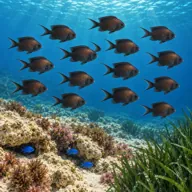
Mediterranean damselfish
Almost always · Kahlija
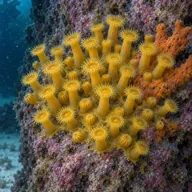
Yellow cluster anemone
Almost always
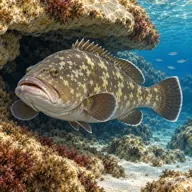
Dusky grouper
Often · Cerna
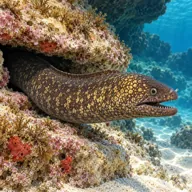
Moray eel
Often · Morina
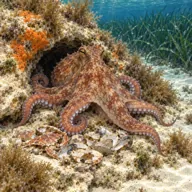
Common octopus
Often · Qarnit
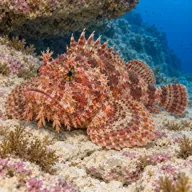
Scorpionfish
Often · Skorfna
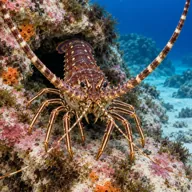
Spiny lobster
Sometimes · Awwista
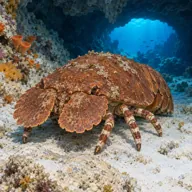
Slipper lobster
Sometimes · Cikala
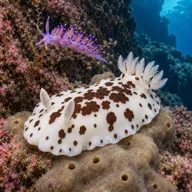
Nudibranchs
Sometimes · Spring
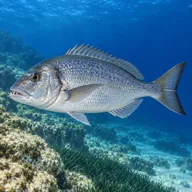
Common dentex
Sometimes · Dentici
Getting in and staying safe
Boat only. Most trips run from Mgarr along the north coast or from the west side if the centre has a rib at Xlendi or Dwejra, and either way it is a long ride with high cliffs and no landing points for most of it. Skippers hold position or use a temporary line rather than anchoring on the reef. Bring everything you need, including water and shade, because there are no facilities and no way out of the water except back onto the boat. Usually paired with San Dimitri Point or Wardija as a west coast double.
- Overhead environments with fine silt that goes off in seconds
- Air pockets in the inner chamber may hold stale or foul air, so do not breathe from them
- Remote position with a long ride to help
- Swell and surge bouncing off the cliff wall inside the cave mouths
- Depth creep down the boulder slope past 35 m
- No shore exit anywhere along this coast
- Torch failure turns an easy cave into a serious one, so carry a backup each
A bit of history
Nothing sunk here and no legend attached, so the story is the rock. This coast is Lower Coralline Limestone, the oldest and hardest of the Maltese formations, and the caves are old sea notches and fissures widened by wave action and by freshwater moving through the joints when sea level was lower. The same processes carved the Wied il-Mielah window a short distance east and, on a much grander scale, the Azure Window at Dwejra that collapsed in a storm in March 2017.
Divers say
Sign in to rate this site and leave a note for the next diver.
- No reviews yet. First one gets bragging rights.
Further reading: Visit Gozo, Ta' Camma · Atlantis Gozo, Ta' Camma · Malta Dives, Ta' Camma Caves