Sliema · Malta
Sliema
A run of shallow shore reefs straight off the Sliema promenade: Fortizza Reef, Coral Gardens and Qui Si Sana, all caverns, gullies and swimthroughs in under 15 metres.
Sea conditions
Excellent right now
Flat, sheltered and calm
Diveable for the rest of the day.
Forecast for the site, updated 12:44 PM · Models differ a little
Measured at Fort St Elmo (2.5 km away, 01:50 PM): 10 km/h from NNW, gusts 11. The next hours lean on it.
- Waves
- 0.2 m
- from ESE, biggest 0.3
- Wind
- 10 km/h
- NW, gusts 23
- Swell
- 0.1 m
- 4 s period
- Sea temp
- 28 °C
- air 25 °C
Hour by hour
Next 7 days
Sunrise 06:47, sunset 19:03
Waves: Copernicus Med-Waves 4 km + MFWAM 8 km + EWAM 5 km + ECMWF WAM 9 km. Wind: ICON-2I 2 km + ECMWF IFS 9 km + ICON-EU 7 km + UKMO 10 km + ARPEGE 11 km. Read a few km out on the side the site is open to, then blended.
Exposed to wind and swell from: N (0°), NE (45°), E (90°). This coast faces open sea to the northeast, so a Grigal blow shuts it down completely. In the prevailing northwesterly it is usually workable and often flat, which is why Sliema is the standard fallback when the north and west coasts are out. Best season: Year round, with the clearest water from June to November. Winter offers empty parking and good visibility between weather systems..
Dives at Sliema
The dive
Sliema is the unlikely one. You are on a city seafront, surrounded by joggers, gelato and hotel towers, and yet ten metres off the rocks the limestone breaks into a maze of gullies, arches, overhangs and short tunnels. The whole stretch sits under the silhouette of Il-Fortizza, the old British battery on Tower Road, which doubles as the landmark everyone navigates by.
Three named sites share this coast. Fortizza Reef has the most structure: caverns, swimthroughs, valleys and undercuts spread across a shallow reef that rarely passes 15 metres. Coral Gardens, a few hundred metres along, is more about canyons and rock formations with tunnels you can swim clean through. Qui Si Sana, towards the Tigne end, is the plainest of the three and earns its keep as a training and try-dive patch. Exiles, about a kilometre up the coast, rounds out the neighbourhood.
None of it is deep and none of it is dramatic on paper, which is precisely why it works as a second dive, a refresher, a night dive or a photography session. The rock holds a surprising amount of small life, and the light in the gullies on a bright afternoon is the reason half of Malta's underwater portfolios were shot here.
The catch is everything that comes with a city. Boats pass directly over the reefs, so a DSMB is part of the kit rather than an optional extra, and summer parking anywhere near the promenade is a competitive sport. Come early, or come in winter, when the seafront is yours.
- City-centre diving with a genuine maze of gullies and swimthroughs
- Three separate reefs within walking distance of each other
- Perfect second dive, refresher or night dive
- Excellent light for photography in the shallow caverns
- Cafes, toilets and dive centres literally on the kerb
Typical plan
Pick one of the three reefs, enter off the rocks, and follow the reef out to 12 to 15 metres before turning along the coast with the rock on one shoulder. Spend the back half of the dive weaving through the shallower gullies and caverns at 5 to 8 metres, which makes the ascent take care of itself. Sixty minutes on a single 12 litre is normal; air is fine, and a torch turns an ordinary dive into a good one.
What the bottom looks like
- 1Shallow caverns and overhangs5 m deep · 25 m out
- 2Swimthrough tunnels in the reef8 m deep · 50 m out
- 3Gullies and valleys running seaward10 m deep · 80 m out
- 4Broken boulder ground13 m deep · 130 m out
- 5Sand at the outer edge of the reef15 m deep · 175 m out
Sculpted Globigerina limestone reef cut by gullies and tunnels, running out to sand and weed at around 15 metres.
Who you might meet
Almost always
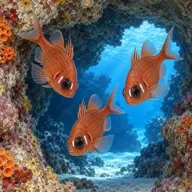
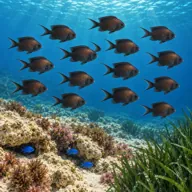
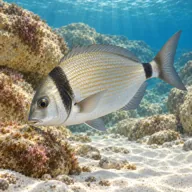
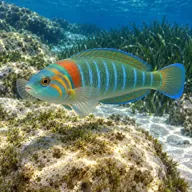
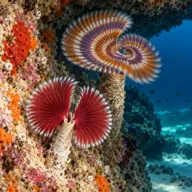
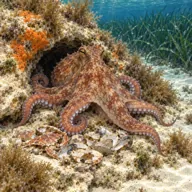
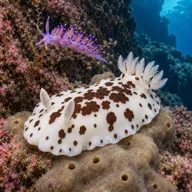
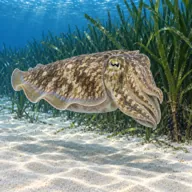
Marked ones can hurt you. What they do and what to do about it is under Getting in and staying safe.
Getting in and staying safe
All shore dives, straight off the rocky promenade between Tigne and Exiles. Steps, cut ramps and ladders lead into the water at several points, and dive centres on Tower Road are close enough that many groups walk to the site in kit. Parking along the front is the real problem: in summer and at weekends it is close to impossible, so go at dawn or use a centre's minibus. Public toilets, cafes, restaurants, shops and beach clubs line the whole stretch.
- Constant boat traffic, some passing directly over the reefs; carry and deploy a DSMB
- Surge and washing-machine water in the gullies whenever there is a northeast swell
- Slippery, urchin-covered entry rocks
- Swimmers and snorkellers overhead in summer
- Fishing line and hooks around the promenade
- Jellyfish blooms in late summer
Marine life to respect
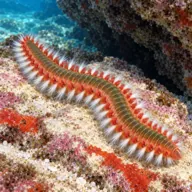
Bearded fireworm · Busuf Can hurt you
Bristles snap off in the skin and burn for hours. Never touch; lift them out with tape, then hot water.
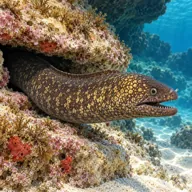
Mediterranean moray · Morina Can hurt you
Bites hard if a hand goes into its hole. Keep hands out of cracks and never feed one.
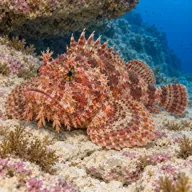
Red scorpionfish · Ċippullazza Can hurt you
Venomous spines, and it sits still on the rock. Look before you kneel or hold on; hot water if stung.
A bit of history
The coast takes its identity from Sliema Point Battery, better known as Il-Fortizza, begun by the British in 1872 and finished in 1876 as part of the post-Jervois rebuilding of Malta's coastal defences. Its muzzle-loading guns went in 1905 and a searchlight tower was added to watch for ships closing on the harbours; the limestone building survives on Tower Road and now houses a restaurant. The rock itself is Globigerina limestone, soft enough for the sea to have carved the gullies, overhangs and swimthroughs that make these reefs worth diving, and soft enough for the Victorians to have cut bathing pools and ramps into the shoreline.
Divers say
Sign in to rate this site and leave a note for the next diver.
- No reviews yet. First one gets bragging rights.
Further reading: Wikipedia: Sliema Point Battery (Il-Fortizza) · Dive Systems Malta: Fortizza, Sliema · Wikipedia: Sliema, coast and promenade