Sliema · Malta
Fortizza Reef
The best-structured of the Sliema shore reefs: caverns, arches, tunnels and gullies carved into the limestone below the old battery, none of it deeper than about 15 metres.
Sea conditions
Excellent right now
Flat, sheltered and calm
Forecast for the site, updated 02:18 AM
- Waves
- n/a
- Wind
- 3 km/h
- SSW, gusts 6
- Swell
- n/a
- Sea temp
- n/a
- air 25 °C
Next 7 days
Sunrise 06:46, sunset 19:04
Exposed to wind and swell from: N (0°), NE (45°), E (90°). Flat and clear in a westerly or northwesterly, which is most of the year. A northeasterly makes the entry dangerous and fills the gullies with surge and sand. Best season: Year round; June to November for warm, clear water, winter for empty parking and long visibility..
The dive
Dive centres on Tower Road call this their house reef and use it for everything, and once you have swum it you understand why. The rock below Il-Fortizza has been worked over by the sea into a proper little landscape: overhangs to duck under, arches to frame a buddy in, short tunnels you can swim clean through, and valleys that lead you seaward without any need for a compass.
Depth is the friendly part. The reef runs out gently and the dive caps out around 15 metres, so you are limited by cold and air rather than by no-deco time. That makes it the natural home of the second dive, the skills dive and the after-work dive, and it is forgiving enough that a fresh Open Water diver can enjoy it while an instructor two metres away runs a course.
What surprises people is the life. For a reef in the middle of a city seafront it holds a lot: octopus wedged into the undercuts, moray heads poking from cracks, clouds of cardinalfish in the darker caverns, damselfish above every high point and a long list of small, slow, photogenic things on the sponge-covered ceilings. Bring a torch even at midday; the overhangs hide everything good.
It is also a useful navigation classroom. The gullies run in predictable directions, the shoreline is always shallow, and you can practise pilotage by rock feature and check yourself with a compass without ever being far from an exit.
- Caverns, arches and tunnels within a few minutes of the car
- Maximum around 15 metres, so bottom time is generous
- Strong macro photography with a torch under the overhangs
- Natural classroom for compass work and pilotage
- Dive centre, coffee and a restaurant in the old battery right above you
Typical plan
Enter off the rocks, drop to 5 metres and follow a gully seaward to the outer reef edge at 13 to 15 metres, then turn and run parallel to shore for fifteen or twenty minutes. Come back inshore through a different gully, spend the last third of the dive at 4 to 8 metres exploring the caverns and arches, and exit at the steps you scouted. Sixty to seventy minutes on a single cylinder, air is plenty, torch strongly recommended.
What the bottom looks like
- 1Shallow caverns under the reef edge5 m deep · 20 m out
- 2Rock arch and overhangs7 m deep · 40 m out
- 3Short swimthrough tunnel9 m deep · 65 m out
- 4Gullies and valleys running out from shore11 m deep · 95 m out
- 5Sand and weed at the outer edge14 m deep · 150 m out
Carved Globigerina limestone with sand pockets in the gullies, easing into sand and weed at around 15 metres.
Who you might meet

Cardinalfish
Almost always · Sultan iċ-ċawl

Mediterranean damselfish
Almost always · Ċawl
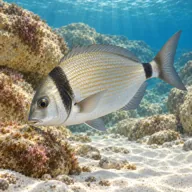
Two-banded seabream
Almost always · Sargu
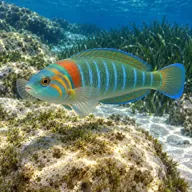
Ornate and painted wrasse
Almost always · Tirda tal-passa
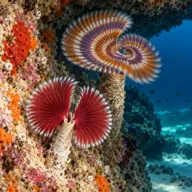
Sponges and tube worms
Almost always
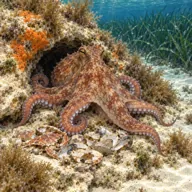
Common octopus
Often · Qarnit
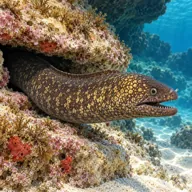
Moray eel
Often · Morina
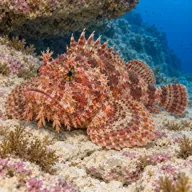
Scorpionfish
Often · Cippullazza
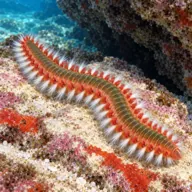
Fireworms
Often · Busuf
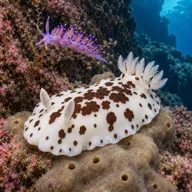
Nudibranchs
Sometimes · spring
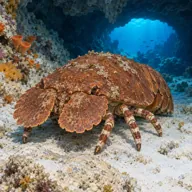
Slipper lobster
Lucky day · Ċkala
Getting in and staying safe
Shore dive straight off the promenade below Il-Fortizza on Tower Road. Kit up on the flat rock or at the dive centre and walk in; entry and exit are over cut rock and steps, which are slippery when wet and best scouted before you put your fins on. Parking along Tower Road is the main headache from June to September and at weekends. Cafes, restaurants, toilets and dive shops are all within a couple of minutes.
- Boat traffic passing over the reef; deploy a DSMB if you leave the shallow rock
- Surge in the tunnels and caverns whenever there is a northeasterly swell
- Slippery, urchin-studded entry and exit rocks
- Overhead environment in the larger caverns, so keep to daylight zones without proper training
- Swimmers, snorkellers and jet skis in summer
- Fishing line snagged on the reef edge
A bit of history
The reef is named for Sliema Point Battery above it, built by the British between 1872 and 1876 to cover the approaches to the harbours, disarmed in 1905 when a searchlight tower replaced its guns, and now a landmark restaurant known simply as Il-Fortizza. The underwater topography is pure geology: Globigerina limestone, soft and easily cut, dissolved and quarried by wave action into the caverns and tunnels divers now swim through. Sections of the shoreline still show Victorian-era cut steps and bathing pools.
Divers say
Sign in to rate this site and leave a note for the next diver.
- No reviews yet. First one gets bragging rights.
Further reading: Dive Systems Malta: Fortizza dive site · Wikipedia: Sliema Point Battery · Malta Dive Sites: Fortizza Reef