Gozo
Phoenician Shipwreck
A Phoenician trading ship that went down off Xlendi in the late 7th century BC and has lain at 110 metres ever since, cargo still stacked. Archaeologically extraordinary, and closed to recreational diving.
Sea conditions
Excellent right now
Flat, sheltered and calm
Forecast for the site, updated 01:33 AM
- Waves
- 0.3 m
- from SE
- Wind
- 8 km/h
- SSW, gusts 14
- Swell
- 0.2 m
- 5 s period
- Sea temp
- 28 °C
- air 27 °C
Next 7 days
Sunrise 06:47, sunset 19:06
Exposed to wind and swell from: W (270°), SW (225°), S (180°), NW (315°), SE (135°). Fully offshore on Gozo's southwest side, open to almost everything except a northeasterly blocked by the island. Survey and excavation operations have only run in settled summer weather. Best season: Not applicable for diving. Research operations run in flat conditions from late spring to early autumn..
The dive
This is the oldest known shipwreck in the central Mediterranean, and it is not a dive site. It is a protected archaeological deposit sitting at one hundred and ten metres on the seabed off Xlendi, found in 2007 when a University of Malta offshore survey picked up an odd sonar return and somebody decided to look closer. What they found was a Phoenician trading vessel of the late seventh century BC with its cargo more or less as it was loaded.
The cargo is the story. Volcanic quern stones from Sicily, never used and clearly destined for sale, sit alongside amphorae and smaller jugs and urns that once carried wine, oil and other goods. Several of the ceramic types are unique in the Maltese record. Investigators even documented a mortise and tenon joint from the hull, the shell-first shipbuilding method that held Mediterranean ships together for centuries.
Between 2018 and 2021 the site was excavated by divers working beyond one hundred metres, believed to be the first deep-water archaeological excavation carried out this way. Recovered material has been conserved and put on public display, and the wider plan is a deep-water archaeological park off Xlendi covering this and neighbouring deposits, including the separate Tower Wreck at roughly one hundred and five to one hundred and fifteen metres, a Punic-period scatter of amphorae named after the 17th century Xlendi watchtower.
For divers the practical summary is short. The site is restricted, the depth is firmly technical territory, and the way to see it is the museum exhibition and the published survey imagery rather than a shot line. Listed here for completeness and because it is one of the most important things under Maltese water.
- Oldest known shipwreck in the central Mediterranean, late 7th century BC
- The only intact mixed Phoenician cargo ever found
- Unused Sicilian quern stones still stacked as loaded
- First deep-water archaeological excavation carried out by divers past 100 m
- Closed to sport diving: see it through the museum exhibition and 3D survey
Typical plan
Not a divable site. Access is by research permit only and the depth demands hypoxic trimix, a full staged decompression plan running to hours, surface support and a chamber on standby. For the rest of us the plan is the Phoenician Shipwreck exhibition and the Underwater Malta virtual museum, both of which show the deposit in more detail than any bottom time would.
What the bottom looks like
- 1Main cargo mound of amphorae and ceramics110 m deep · 20 m out
- 2Scatter of Sicilian volcanic quern stones110 m deep · 35 m out
- 3Flat muddy sand around the deposit111 m deep · 60 m out
- 4Low relict coral outcrops that trap material112 m deep · 90 m out
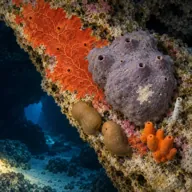
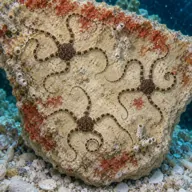
Flat, soft sediment plain at around 110 m, broken only by low relict coral outcrops standing a metre or so proud.
Who you might meet




Getting in and staying safe
There is no diver access. The wreck lies well offshore of Xlendi at a depth that puts it beyond recreational and most technical sport diving, and it is a protected archaeological site where work has been carried out under permit by Heritage Malta, the University of Malta and partner institutions. Recovered artefacts and full 3D survey material are presented publicly, including through the Phoenician Shipwreck exhibition and the Underwater Malta virtual museum. If you want to experience it, that is the route.
- Depth of 110 m: hypoxic trimix, staged decompression and full technical support territory
- Protected archaeological site, diving it requires permits that are not issued for recreation
- Far offshore with no shelter and a long surface interval exposed to weather
- Any contact risks destroying irreplaceable context
- Long decompression obligation with real omitted-deco consequences
A bit of history
The ship sank in the late 7th century BC while trading along the central Mediterranean routes, carrying unused volcanic grinding stones quarried in Sicily together with amphorae and finer ceramics. It was located in 2007 during an offshore remote sensing survey led by the University of Malta at about 110 m depth roughly 900 m from Xlendi Bay. Digital mapping and photogrammetry in 2014 identified seven ceramic vessel types; a dozen objects were recovered in 2016 and 2017, and a full diver excavation ran from 2018 to 2021 with support from the Honor Frost Foundation. It remains the only intact, well preserved mixed Phoenician cargo known. Conservation and study continue, and proposals since 2021 have debated raising the wreck for museum display against preserving it in place as the centrepiece of a planned Xlendi underwater archaeological park.
Divers say
Sign in to rate this site and leave a note for the next diver.
- No reviews yet. First one gets bragging rights.
Further reading: Wikipedia, Gozo Phoenician shipwreck · Underwater Malta virtual museum, Phoenician Shipwreck · Underwater Malta virtual museum, Tower Wreck · Exploring an Archaic Shipwreck off Xlendi Bay project site · Honor Frost Foundation project page · Heritage Malta exhibition page