Mgarr ix-Xini · Gozo
Kantra Caves
Two small caves set into the wall near the mouth of Mgarr ix-Xini, shallow enough for a newly certified diver and dark enough to make good backlit photographs. Worth doing as part of the bay, not as a special journey.
Sea conditions
Good right now
Some chop (0.3 m SE)
Forecast for the site, updated 01:45 AM
- Waves
- 0.3 m
- from SE
- Wind
- n/a
- Swell
- 0.2 m
- 5 s period
- Sea temp
- 28 °C
Next 7 days
Exposed to wind and swell from: S (180°), SE (135°), E (90°). Nearer the open sea than the inner bay, so it picks up swell from the south and southeast sooner and surge inside the caves is the first sign. Calm and sheltered in northerly and northwesterly winds, which is when most people dive it. Best season: Late spring to autumn for warmth and light inside the caves; usable in winter whenever the wind sits in the north..
The dive
Kantra is the outer end of the Mgarr ix-Xini story. Where the inner bay is all sand and seagrass, the walls near the mouth are sculpted rock with two cave mouths punched into them, one noticeably larger than the other and about eighty metres apart. Neither is deep or complicated. You swim in, turn around, and swim out, with daylight in view the whole time, which is exactly what makes them such a good first cave experience.
The larger cave is the better of the two and the one most divers spend time in. Hang back near the entrance, look outwards, and it becomes obvious why photographers like it: silhouetted divers against a blue doorway is a cliche for a reason. Inside, the walls carry small crabs, tube worms, encrusting sponges and the odd cardinalfish hovering in the gloom. The smaller cave sits deeper, around twelve to fourteen metres, and is more of a quick look than a linger.
On its own this is a modest dive and honest reviews say so: the marine life is thin compared with the sandy middle of the bay, and Gozo has grander caves elsewhere. Combine it with the rest of Mgarr ix-Xini, though, and it turns a pleasant shallow potter into a proper dive with a bit of structure and a bit of theatre.
It also earns its keep on bad days. When wind shuts the north and west, this corner of the south coast is often still calm, and a shallow cave dive beats a cancelled one.
- Two easy, daylight-lit caves for a first overhead experience
- Classic backlit silhouette photography at the larger entrance
- Good bad-weather fallback when the north coast is shut
- Combines neatly with the rest of Mgarr ix-Xini in one dive
Typical plan
From the Mgarr ix-Xini beach, drop in and transit out along the eastern wall at six to eight metres, roughly ten minutes of swimming. Explore the larger cave first with a torch, keeping off the floor, then move along the wall to the smaller one at twelve to fourteen metres. Turn on half gas and retrace the wall, finishing on the sand and seagrass inside the bay. Depths are shallow enough that a single twelve litre gives sixty minutes or more. Take a torch each and agree a no-silt, single-file plan before you go in.
What the bottom looks like
- 1Sandy floor with small flatfish8 m deep · 250 m out
- 2Larger cave mouth in the eastern wall9 m deep · 300 m out
- 3Undercut wall section between the caves10 m deep · 340 m out
- 4Second, smaller cave around 12 to 14 m13 m deep · 420 m out
Mostly clean sand at the foot of the wall, with rubble and small boulders below the cave mouths.
Who you might meet
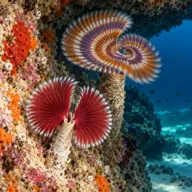
Tube worms
Almost always
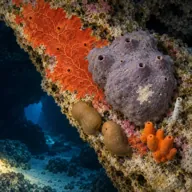
Encrusting sponges
Almost always · Sponoż
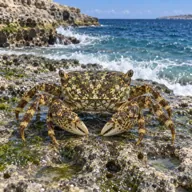
Small crabs
Almost always · Granċ
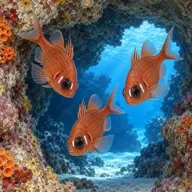
Cardinalfish
Often · Sultan iċ-ċawl
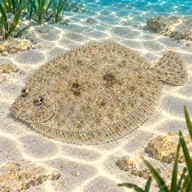
Wide-eyed flounder
Often · Barbun tal-għajn
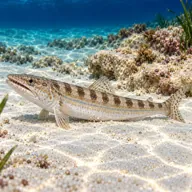
Atlantic lizardfish
Often · Gremxula tal-baħar
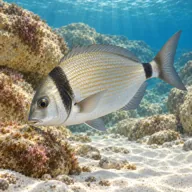
Two-banded seabream
Often · Sargu
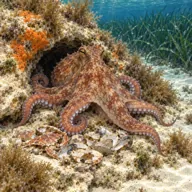
Common octopus
Sometimes · Qarnit
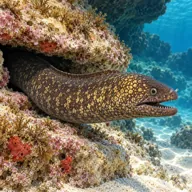
Mediterranean moray
Sometimes · Morina
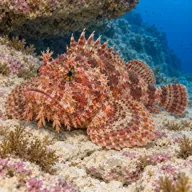
Scorpionfish
Sometimes · Ċippullazza
Getting in and staying safe
There is no separate parking or entry: you use Mgarr ix-Xini. Park behind the pebble beach, walk in there, and either surface swim out along the eastern side or dive the whole way at five to eight metres. Allow a few minutes each way for the transit. Rocky scrambles exist on the Kantra side but they are awkward with kit and not worth the bruises. Boats sometimes drop divers straight onto the cave mouths, which is the comfortable option.
- Overhead environment, short but real: take a torch and keep daylight in sight
- Silt on the cave floors clouds fast with sloppy finning
- Surge inside the caves with any south or southeast swell
- Boat traffic near the mouth of the inlet, use a surface marker
- Longer swim back to the beach than people expect
- Awkward, slippery rocks if you try to exit on the Kantra side
A bit of history
Nothing sunk or lost here. The caves are simple sea-cut hollows in the coralline limestone that forms the cliffs of Gozo's southern coast, widened over millennia by wave action at and just below the waterline, then drowned as sea level rose. The Kantra name belongs to the shoreline and small beach area on the eastern side of the inlet.
Divers say
Sign in to rate this site and leave a note for the next diver.
- No reviews yet. First one gets bragging rights.
Further reading: MaltaDives site page and diver reviews · Greatest Dive Sites, Caves at Kantra Beach · Calypso Sub-Aqua Club site notes · Visit Gozo, Il-Kantra