Malta
HMS Urge
A British U class submarine lost with all hands in 1942 and finally located in 2019, sitting upright on the seabed a few kilometres off the Grand Harbour approaches at around 130 metres. She is a war grave rather than a dive in the ordinary sense.
Sea conditions
Good right now
Some chop (0.5 m E)
Forecast for the site, updated 01:48 AM
- Waves
- 0.5 m
- from E
- Wind
- n/a
- Swell
- 0.5 m
- 5 s period
- Sea temp
- 29 °C
Next 7 days
Exposed to wind and swell from: N (0°), NE (45°), E (90°), SE (135°), S (180°). An offshore site with almost no natural shelter. Anything above a light breeze makes the surface work unpleasant and the deco stops miserable, so trips go on flat, settled days only. Visibility at that depth is usually good and the light is gone, so it is a torch dive whatever the surface is doing. Best season: June to early October, on the calmest possible day.
The dive
Urge was one of the small, hard worked boats of the Tenth Submarine Flotilla, the Malta based unit that made life miserable for Axis convoys during the worst of the siege. She is not long, a shade under sixty metres, and she carried a crew who knew every rivet of her. On 27 April 1942 she slipped out for Alexandria and simply never arrived.
The seabed picture matches the story exactly. She stands upright and looks almost ready to get under way, deck gun trained forward, conning tower intact enough that divers were able to read three letters of her name on the side plating. The bow tells the other half of the tale: it is torn open and driven down into the soft sediment, the forward torpedo compartment laid bare by the mine that killed her.
What you need to understand before you get excited is that nobody dives this for fun. At roughly 130 metres she is trimix and closed circuit territory, well beyond the depth most technical programmes in Malta will take a visiting diver, and she carries forty four people who were never brought home. Access is controlled and the site is treated with the respect a cemetery deserves. For almost everyone reading this, the honest answer is to look at the virtual model and leave the water to the archaeologists.
- One of the most storied submarines of the siege of Malta
- Upright and remarkably coherent apart from the shattered bow
- The lettering on the conning tower that ended eighty years of argument
- A properly protected war grave, worth knowing about even if you never dive it
Typical plan
Not a plannable recreational or even ordinary technical dive. Anyone who does go is on closed circuit with hypoxic trimix, a bottom time of fifteen to twenty minutes at roughly 130 metres and a couple of hours of decompression, running a single pass along the hull from stern to bow with no entry into the pressure hull. Permission from the authorities comes before anything else.
What the bottom looks like
- 1Stern and propellers132 m deep · 8 m out
- 2Conning tower with surviving name lettering127 m deep · 30 m out
- 3Deck gun trained forward130 m deep · 38 m out
- 4Mine damage at the bow, torpedo tubes exposed133 m deep · 62 m out
- 5Flat sediment plain beyond the bow134 m deep · 85 m out
A flat plain of soft grey silt and fine sand that the bow section has ploughed into.
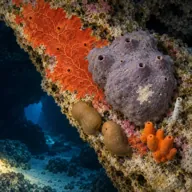
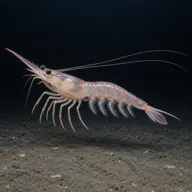
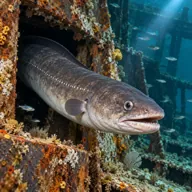
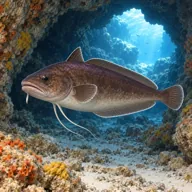
Who you might meet


Getting in and staying safe
Boat only, and not a charter you can simply book. The wreck lies several kilometres offshore in open water and diving it requires official permission. Surface support needs to be properly set up for long decompression: live boat cover, a shot and lazy line, deco gas hung off, and a plan for the swell that builds outside the harbour approaches in the afternoon.
- Extreme depth, well past normal technical limits
- Long mandatory decompression with no bail out to shallow water
- Open water boat traffic including commercial shipping into Grand Harbour
- Exposed position with little shelter if the wind picks up
- War grave status: penetration and any disturbance are off limits
- Fine sediment around the damaged bow silts out instantly
A bit of history
Laid down as a U class boat of the second group, about 58 metres long, Urge served under Lieutenant Commander Edward Tomkinson and racked up an extraordinary record from Malta: she damaged the battleship Vittorio Veneto in December 1941 and sank the Italian cruiser Giovanni delle Bande Nere in April 1942, and she was also used for landing raiding parties by folding canoe. She sailed from Malta on 27 April 1942 bound for Alexandria and struck a mine shortly after leaving, taking down 32 crew, eleven naval passengers and a war correspondent, 44 people in all. Her fate fed decades of speculation, including a persistent claim that she had been sent on a secret mission elsewhere. That was put to rest in October 2019 when a remote sensing survey run by the University of Malta's Maritime Archaeology Programme, prompted by the commanding officer's grandson, found her. Divers confirmed the identification from lettering on the conning tower in 2021, and she was formally protected as a war grave.
Divers say
Sign in to rate this site and leave a note for the next diver.
- No reviews yet. First one gets bragging rights.
Further reading: Underwater Malta: HMS Urge · Wikipedia: HMS Urge · BSAC: wreck of famous British WWII submarine found off Malta · Times of Malta: confirmed, wreck off Malta is the submarine sunk in 1942 · Malta Dive Sites: HMS Urge