Malta
Fairey Swordfish
A Second World War biplane torpedo bomber sitting on sand at around 70 m off Sliema, its fabric long gone but the frame, engine and three-blade propeller still in place. Trimix, a boat and a Heritage Malta permit.
Sea conditions
Excellent right now
Flat, sheltered and calm
Forecast for the site, updated 01:47 AM
- Waves
- 0.4 m
- from ESE
- Wind
- n/a
- Swell
- 0.4 m
- 5 s period
- Sea temp
- 29 °C
Next 7 days
Exposed to wind and swell from: N (0°), NE (45°), E (90°), SE (135°), S (180°), SW (225°), W (270°), NW (315°). Fully offshore, so every sector is open and the decision is made on sea state rather than shelter. Operators will only run it on a flat day, because long decompression on an open boat in chop is miserable and unsafe. Visibility at depth is usually excellent, often 30 m or more, with noticeably cooler water below the thermocline. Best season: May to October, when the sea is settled enough for reliable boat work and long surface intervals..
The dive
The Swordfish was already an anachronism when it went to war: an open-cockpit biplane with a fixed undercarriage, doing torpedo work into the 1940s and, awkwardly for everyone, doing it rather well. This one never made it far from Ħal Far. The engine faltered shortly after take-off and the pilot put her down in the sea, both crew getting out alive while the aircraft sank into 70 m of water and stayed lost for three quarters of a century.
What survives is essentially the skeleton. The doped fabric that covered wings and fuselage has rotted away entirely, leaving a beautifully legible steel frame, so you swim through the shape of an aeroplane rather than over its skin. The wings and tail structure read clearly, the radial engine sits at the nose with its three-bladed propeller still attached, and the cowling has come through remarkably intact.
This is a protected archaeological site. Diving it means going with an operator registered with Heritage Malta, on their permit, from a boat, with trimix, a proper deco plan and the discipline that goes with a short bottom time at 70 m. Nothing is touched, nothing is moved. For those without the certification, Underwater Malta's virtual museum has photogrammetry of the site that is genuinely worth an evening.
- One of very few divable Fairey Swordfish anywhere on earth
- Engine, cowling and propeller intact after eighty years down
- Skeletal airframe that reads like a technical drawing
- Protected Heritage Malta site with a strict, well run permit system
Typical plan
Boat out, descend the shot on trimix with a bottom mix chosen for around 70 m, and budget roughly 20 to 25 minutes on the wreck. One slow circuit from the engine down the fuselage to the tail, out along one wing and back, then up the line on schedule. Decompression on 50 percent and oxygen typically runs 45 to 70 minutes depending on the plan. Twin sets or rebreather, two deco cylinders, redundant lights and a surface marker, with boat cover staying on you throughout.
What the bottom looks like
- 1Shotline meeting the sand68 m deep · 18 m out
- 2Radial engine, cowling and three-blade propeller69 m deep · 30 m out
- 3Cockpit frame and fuselage skeleton70 m deep · 40 m out
- 4Biplane wing structure, fabric gone70 m deep · 52 m out
- 5Tail assembly70 m deep · 65 m out
- 6Scattered fragments on the surrounding seabed70 m deep · 80 m out
Flat, fine offshore sand at about 70 m, with the aircraft resting more or less in its ditched attitude.
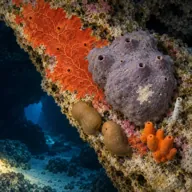
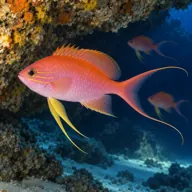
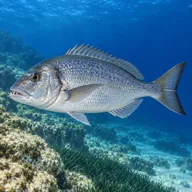
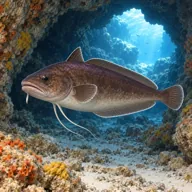
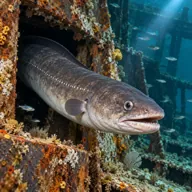
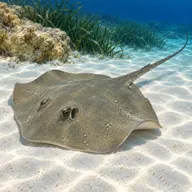
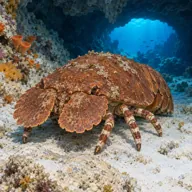
Who you might meet

Getting in and staying safe
Boat only, roughly 5 km off the Sliema and St Julian's coast. Access is through dive centres registered and approved by Heritage Malta, who hold the permit, the position and the shotline arrangements. Expect a formal briefing, a check of certifications and gas plans, and a no-touch, no-penetration rule. Advanced trimix qualification and solid deep experience are the entry ticket, not a nice-to-have.
- Seventy metres: narcosis, gas density, oxygen exposure and a long decompression obligation
- Mandatory trimix and full technical redundancy
- Open sea with boat traffic above the deco stops
- Current at depth and on the ascent line
- Low light and limited natural reference on flat sand
- Fragile, corroded aircraft structure that must not be touched or entered
- Legal risk: diving without the Heritage Malta permit is an offence
A bit of history
The Fairey Swordfish, universally nicknamed the Stringbag, first flew in 1934 and served the Fleet Air Arm and RAF until 1945. This aircraft ditched in 1943, most reports placing it in April, after engine trouble shortly following departure from Ħal Far; the two crew survived. The wreck was located in June 2017 during survey work and opened to permitted divers on 1 May 2019 under the management of Heritage Malta's Underwater Cultural Heritage Unit. With only a handful of Swordfish surviving anywhere in the world, the site carries real international significance.
Divers say
Sign in to rate this site and leave a note for the next diver.
- No reviews yet. First one gets bragging rights.
Further reading: Heritage Malta: Fairey Swordfish · Underwater Malta: Fairey Swordfish · DIVE Magazine: Malta's deep wrecks · Wrecksite: Fairey Swordfish · Malta Dive Sites: Fairey Swordfish wreck