Exiles · Malta
Exiles
A rocky point on the Sliema promenade that doubles as Malta's most convenient training playground: gullies and Posidonia inshore, a 30 m tugboat sitting at 22 m out on the sand.
Sea conditions
Excellent right now
Flat, sheltered and calm
Forecast for the site, updated 02:18 AM
- Waves
- n/a
- Wind
- 3 km/h
- SSW, gusts 6
- Swell
- n/a
- Sea temp
- n/a
- air 25 °C
Next 7 days
Sunrise 06:46, sunset 19:04
Exposed to wind and swell from: N (0°), NE (45°), E (90°). Best with the wind in the south or southwest, when the land behind Sliema flattens the surface completely. Anything with north or east in it pushes swell straight onto the point and the entry ladder becomes the problem, not the dive. A DSMB is essential in winter and sensible the rest of the year. Best season: Diveable year round. May to November for warm water and the calmest surface, with September and October giving the best visibility; winter southerlies often produce beautifully flat days..
Dives at Exiles
The dive
Exiles sits roughly midway along the seafront between Sliema and St Julian's, under the squat silhouette of the old tower that gives the point its other name. You can be parked, kitted and breathing compressed air within ten minutes, which is why half the island's instructors seem to end up here on a Saturday morning.
The shallows are all low limestone ribs and narrow sandy lanes running seaward, with Posidonia meadows filling the gaps and shoals of damselfish hanging over everything. Keep swimming and the ribs sink away into open sand at around 18 to 20 m, and that is where Tug 2 waits, dropped here in 2013 to give the barren patch something to talk about.
Because the whole site is shallow, well lit and short on navigation puzzles, it works as a first open water dive, a night dive, a wreck skills dive and a lazy shallow potter, sometimes all in the same weekend. The catch is that the same easy access brings jet skis, RIBs and swimmers, so this is a site where you plan your ascent as carefully as your descent.
- Shore access straight off the Sliema promenade
- A genuine 30 m wreck at recreational depth
- Sunlit gullies and thick Posidonia for the shallow half of the dive
- One of Malta's best night dives for octopus and cuttlefish
- Cafes, toilets and parking a stone's throw from the ladder
Typical plan
Kit up on the promenade, walk down and enter off the platform. Drop to the reef, take a compass bearing roughly north and follow the gullies out, letting the bottom take you to 18 m. Cross the sand to Tug 2 at 22 m, spend fifteen minutes on and around her, then come back on the reciprocal along the reef edge, finishing your gas in the shallows where the light is. Air is fine for a 45 to 55 minute dive with a healthy no-stop margin; EAN32 buys you comfort if you want to linger on the wreck. Carry a DSMB and deploy it if you must surface away from the point.
What the bottom looks like
- 1Shallow limestone ribs and sand lanes5 m deep · 30 m out
- 2Posidonia meadow on the reef flat9 m deep · 70 m out
- 3Gullies and overhangs on the outer reef15 m deep · 150 m out
- 4Reef edge falling to open sand19 m deep · 210 m out
- 5Tug 2, upright with her bow against the reef22 m deep · 265 m out
- 6Open sand plain north of the wreck23 m deep · 310 m out
Low Globigerina limestone ribs and boulders inshore, broken by sand channels and Posidonia, giving way to a flat sandy plain at around 20 m.
Who you might meet

Mediterranean damselfish
Almost always · Kaħlija
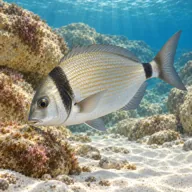
Two-banded bream
Almost always · Sargu
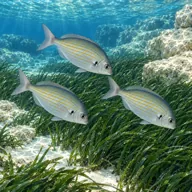
Salema
Often · Salpa
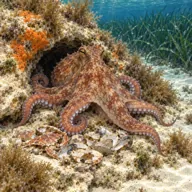
Common octopus
Often · Qarnita
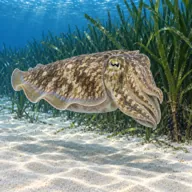
Cuttlefish
Often · Siċċ · Spring
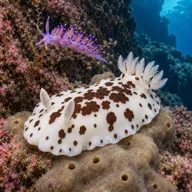
Nudibranchs
Often
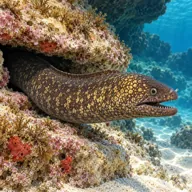
Mediterranean moray
Sometimes · Morina
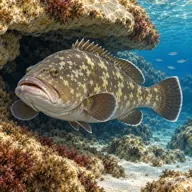
Dusky grouper
Sometimes · Ċerna
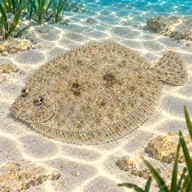
Wide-eyed flounder
Sometimes · Barbun tal-għajn
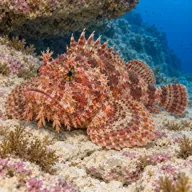
Scorpionfish
Sometimes · Ċippullazza
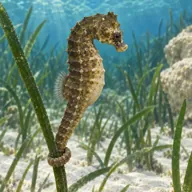
Seahorse
Lucky day · Żiemel tal-baħar
Getting in and staying safe
Park on the seafront road: the bays are 50 to 100 m from the water but fill up fast on summer weekends and public holidays. From the promenade you drop down concrete steps onto a low platform with a fixed ladder. The ladder is often lifted out for the winter, in which case divers giant stride off the side of the platform and climb out over the rock shelf. A second, rougher entry over bare rock exists on the far side of the point. Toilets, kiosks, cafes, grocery shops, a playground and at least one dive centre are all within a short walk, and there are beach clubs on the lido decks in summer.
- Heavy boat traffic in summer, especially weekends: jet skis and RIBs do not always respect the yellow marker buoys
- Marker buoys are removed over winter, so surface cover is not guaranteed
- Swell wraps around the point in northeasterlies and makes the ladder exit ugly
- Slippery concrete and algae-covered rock at the water's edge
- Discarded fishing line and hooks around the point
- Jellyfish, particularly mauve stingers, in late summer and autumn
- Long surface swim back if you overshoot the wreck and surface downwind
A bit of history
Exiles Reef has been a standard Maltese training site for decades. In June 2013 the Professional Diving Schools Association and the Malta Tourism Authority added Tug 2, a retired Grand Harbour tugboat, to the sand just off the reef as an artificial reef project. A second, much less publicised wreck, the barge that blew up during a St Julian's fireworks display in 2009, lies further into the bay to the west.
Divers say
Sign in to rate this site and leave a note for the next diver.
- No reviews yet. First one gets bragging rights.
Further reading: Malta Dive Sites: Exiles · Divers Guide: Exiles · DiveWise Malta: Tug Boat 2 wreck · PADI dive site: Tug 2 · Malta Tourism Authority Dive Site Report 19: Exiles