🦞 Crustaceans · Maja squinado
European spider crab
Għaġużain Maltese, also Granċ
A walking garden of sponge and weed
Meet the European spider crab
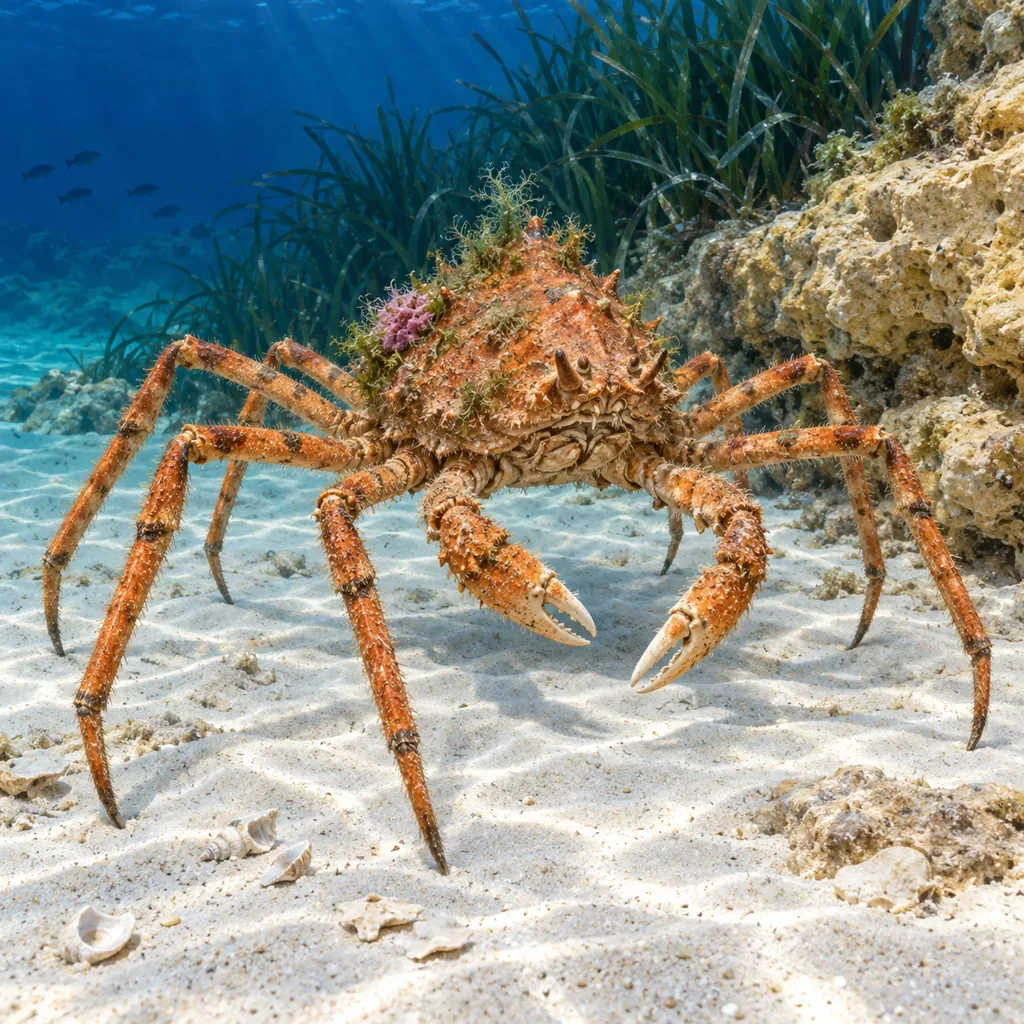
A big, long-legged crab with a roughly pear-shaped or triangular carapace that narrows to two blunt horns at the front, the whole shell covered in short stiff hairs and studded with spines. Base colour is a dull orange-brown to brick red, but you rarely see it clean: the hairs hold scraps of algae, sponge and hydroid that the crab attaches deliberately, so most animals look like a slowly moving patch of reef. Carapace length reaches about 20 cm and the leg span can approach 70 cm, which makes a full-grown one the biggest crab most Maltese divers will see.
It lives on rocky reef, over sand and rubble and along the edges of Posidonia meadows, recorded from the shallows to about 150 m but most often met by divers between 5 and 50 m. It is a slow, deliberate grazer and scavenger, working over algae and picking at carrion and small invertebrates, and it usually walks away rather than confronting you.
The crab is mostly solitary, but around moulting time animals gather, sometimes in heaps, because a freshly moulted crab is soft and defenceless and safety comes in numbers. Females carry a large orange egg mass tucked under the folded abdomen.
When to look: All year; more often seen in the open at night, and gatherings of moulting animals turn up seasonally on sand next to reef.
Diving with them
- Look for legs, not for a crab; the body is camouflaged but the long spidery legs give a clean outline against sand.
- Move slowly and stay off its line of travel and it will usually carry on walking rather than freeze.
- Shoot from the front and slightly low to get the eyes and the two forward horns; from above it disappears into the background.
- Check the carapace for what it has planted on itself, since the sponges and weed differ from animal to animal.
- A crab sitting still and pale beside a discarded shell has just moulted and is very vulnerable, so leave it be.
Can it hurt you?Handle with care
It is not aggressive, but a large animal has strong claws and can pinch hard if handled, and the carapace spines will graze a bare hand.
First aid: Clean and disinfect any broken skin and keep it dry; marine cuts and pinches infect easily.
Easily confused with
- Lesser spider crab (Maja crispata), the same shape but much smaller and usually shallower
- Scorpion spider crab (Inachus dorsettensis), a far smaller, more delicate spider crab often found among anemones
- Sponge crab (Dromia personata), which carries a separate cut sponge over its back rather than growing decoration on its shell
Where to meet them: 2 sites
Further reading: SeaLifeBase: Maja squinado · Diveshack Malta marine life guide · Il-Miklem: Għaġuża (granċ) = Maja squinado · Barcelona Convention SPA/BD Protocol annexes