🪼 Jellyfish · Pelagia noctiluca
Mauve stinger
Bramain Maltese
Small, pretty, and the reason Malta checks the beach report
Meet the Mauve stinger
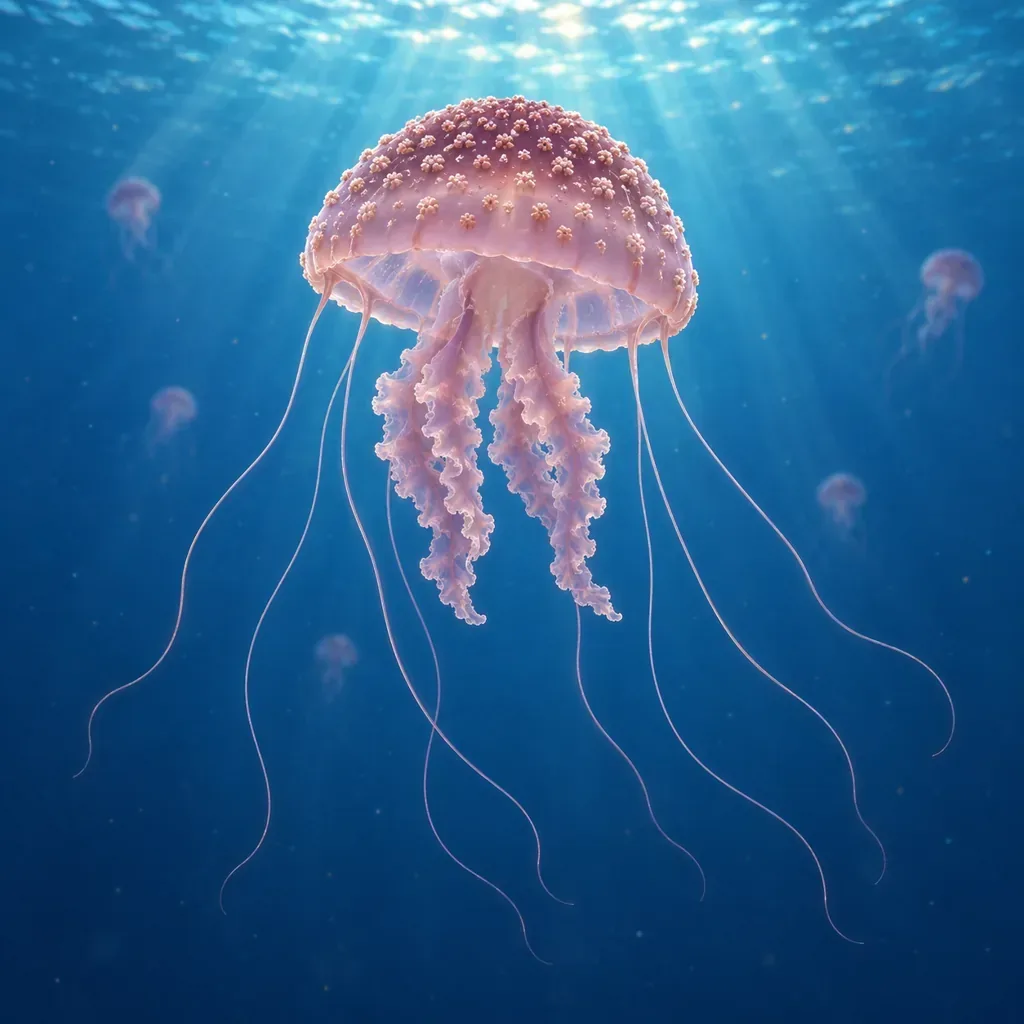
A small mushroom-shaped jellyfish, usually 3 to 10 cm across the bell, coloured warm mauve, pink or purple-brown and covered in raised warty clusters of stinging cells that give the bell a rough, freckled look. Eight long, hair-fine marginal tentacles trail from the bell rim and can stretch a metre or more, and four thicker frilled oral arms hang below the centre. Everything about it stings, bell included, which is unusual - most jellyfish only sting with the tentacles.
It has no bottom-living polyp stage at all. The entire life cycle happens in open water, which is why it can appear in enormous numbers after a run of calm, dry weather and then be pushed inshore in a single night by an onshore wind. The species name noctiluca means night light: disturbed animals glow a faint blue-green in the dark.
In the Maltese islands this is the jellyfish - the most abundant species recorded by the long-running Spot the Jellyfish citizen-science campaign, and the one behind most of the swimmers' stings reported each year. Peak abundance tends to fall in late winter and spring, roughly February to April, with swarms possible at any time of year and especially after settled, windless spells. Maltese has no separate word for it; brama simply means jellyfish.
When to look: Peaks in late winter and spring, roughly February to April, but swarms can arrive in any season after calm weather followed by an onshore wind.
Diving with them
- Check the surface before you giant-stride - a slick of small mauve bells means cover up or call the dive
- Wear a full wetsuit, hood and gloves when they are about; most stings on divers land on the lips, chin and wrists
- Do the last part of your ascent looking up and use your fins and a raised arm to push water, not the jellyfish, out of the way
- Never brush a tentacle off with a bare hand and do not rub the area against your suit
- They stay in the water column, so a safety stop is the highest-risk part of the dive, not the bottom time
- Broken tentacle fragments sting just as well as whole animals, so treat any wisp of purple thread as live
Can it hurt you?Can hurt you
A real sting with immediate burning pain, a raised red whip-line rash that can last for weeks and sometimes scars. Large stings, stings to the face, and rare allergic or systemic reactions with nausea, cramps or breathing difficulty need medical care.
First aid: Leave the water. Rinse only with seawater - fresh water and vinegar both make Pelagia sting cells fire, so use neither - and do not rub the area or scrub it with sand. Lift off any remaining tentacle with tweezers or the edge of a card, then apply heat: immerse in hot water at 40 to 45 C for 20 to 40 minutes, or use a cold pack if hot water is not available. Follow with a topical steroid or antihistamine cream, and seek medical help for facial stings, very large areas, children, or any sign of a whole-body reaction.
Easily confused with
- Fried egg jellyfish, much larger and yellow-brown with a raised central dome and blue-tipped club arms, and essentially harmless
- Barrel jellyfish, a big pale bluish-white dome the size of a dinner plate with eight cauliflower-like arms and only a mild sting
- Portuguese man o' war, rare in Malta but far more dangerous - a blue gas-filled float sitting on the surface with a crest, not a swimming bell
Where to meet them: 2 sites
Further reading: THINK Magazine (University of Malta): ten years of Spot the Jellyfish · Differing effects of vinegar on Pelagia noctiluca and Carybdea marsupialis stings · Inhibition of nematocyst discharge from Pelagia noctiluca · Clinical overview of mauve stinger envenomation